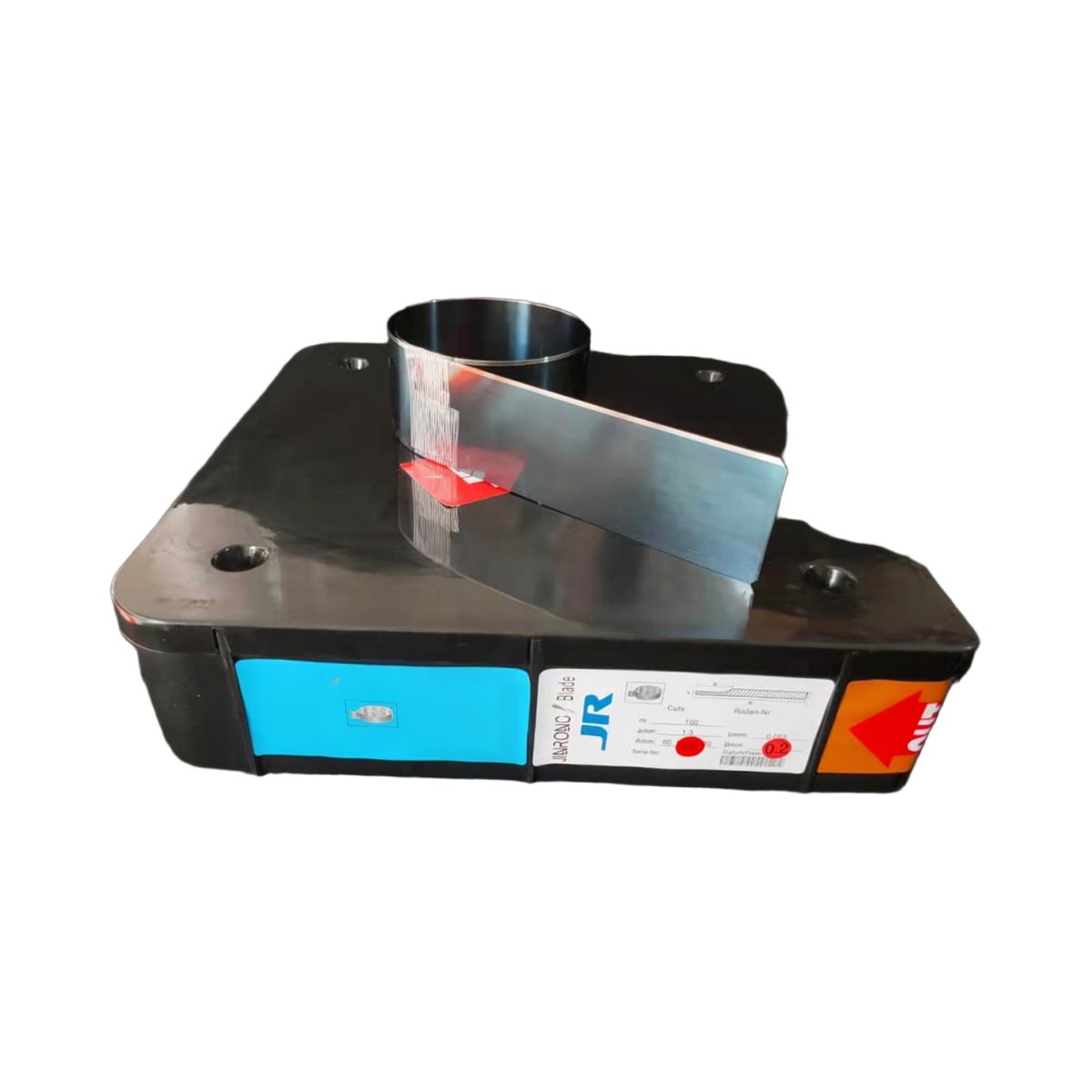
Key features
- Fine-grain tungsten carbide, hardness HRA 89–92
- Mirror-polished edge, Ra 0.05 μm on request
- Single bevel, chamfer and laminated edge types
- Thickness 0.05 – 0.5 mm, widths and lengths to your holder
- Service life many times longer than spring steel blades
Specifications
| Material | Fine-grain tungsten carbide; ceramic option |
| Hardness | HRA 89–92 |
| Thickness | 0.05 – 0.5 mm |
| Width | 10 – 80 mm |
| Length | Up to 4,000 mm |
| Edge | Single bevel, double bevel, chamfer, rounded |
| Straightness | ≤ 0.02 mm / 1,000 mm |
| Surface | Mirror polished, Ra 0.05 – 0.1 μm on edge side |
| MOQ | 1 pc |
Applications
Gravure printing
Ink doctor blades for rotogravure presses.
Coating lines
Coating metering blades for tape, battery and optical film.
Abrasive film slitting
Carbide circular knives for filled and abrasive webs.
Screen & display cutting
Carbide blades for precision display material cutting.
Blade types we make in this line
A partial list — if you do not see your blade, send us the drawing or a photo and we will confirm.
Fitting your machine, and buying a replacement
Ink doctor blades, coating metering blades, ceramic doctor blades and tungsten carbide film slitting knives. Doctor blades are bought by the metre or by the box, and the thing that decides whether they last is how straight and how consistently thin they are — not how hard the steel is.
Also called: tungsten carbide doctor blade · ink doctor blade · coating blade · carbide slitting knives · carbide film slitting knife.
Materials used for this blade
Widely used, well understood grade. Good balance of cost and life.
Read the full grade guideLonger life than Cr12MoV at higher cost. The default upgrade.
Read the full grade guideEconomical and forgiving. Common for large straight knives.
Read the full grade guide