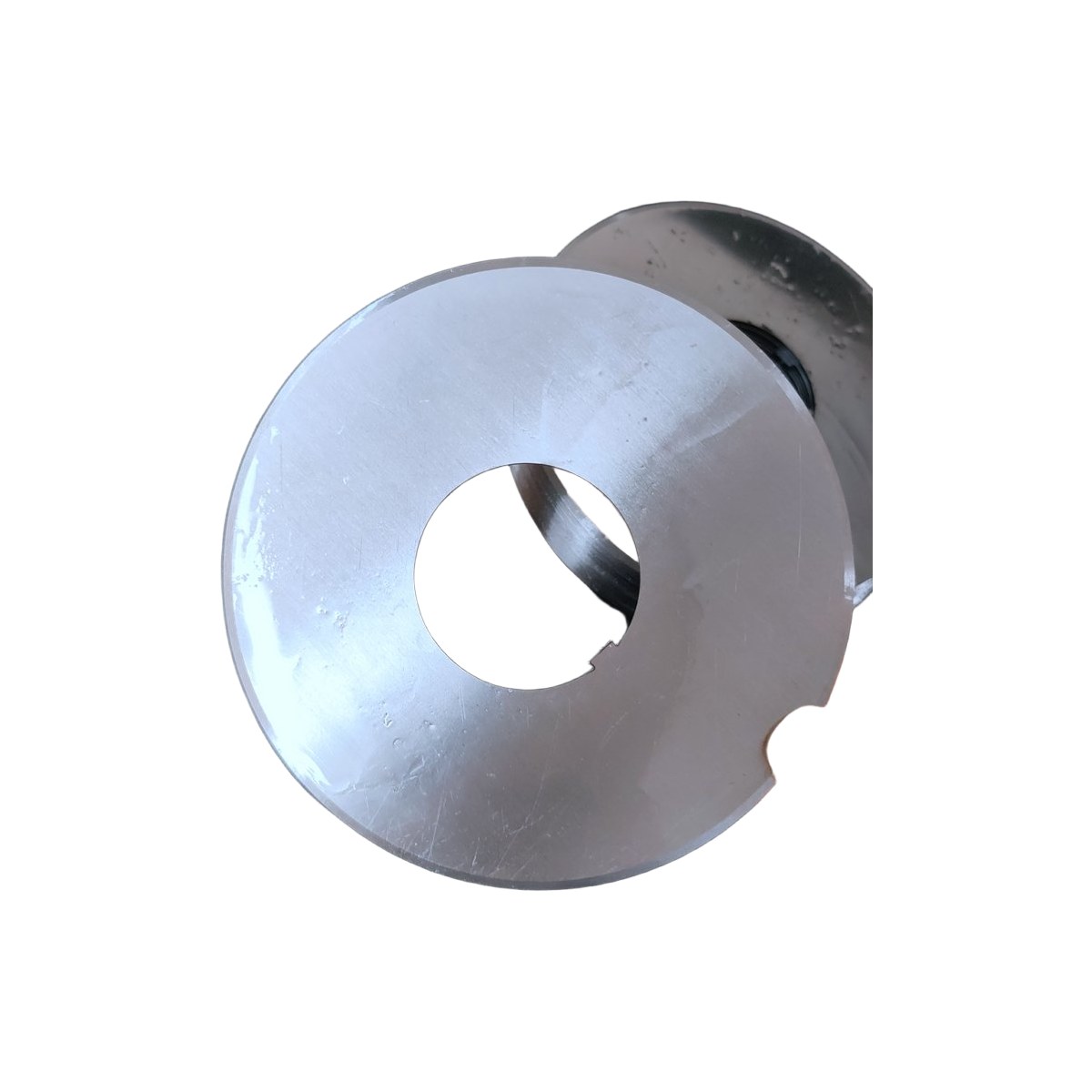
Circular and straight blades in food-grade stainless steel for meat, poultry, seafood, bakery and vegetable processing lines. Mirror-polished surfaces and corrosion-resistant grades, made for wash-down rooms.
Blades for fish filleting and shrimp processing lines, poultry cut-up machines, meat slicers, bowl cutters, dicers and vegetable cutters. Food-contact blades are made in stainless and food-grade tool steel with a polished edge, so there is no pit for bacteria to sit in. Send the machine model or the old blade — we match the diameter, bore and tooth form.
Also called: meat slicer blade · poultry cutting blades · bowl cutter knives · dicer blades · food grade stainless blades · fish filleting blades · shrimp line blades.
For general food cutting, 420J2 is the economical choice. For high-wear work or bone contact, use 440C — it holds an edge roughly twice as long. If the blade never contacts food directly but sits in a wash-down area, 304 is the most corrosion-resistant option. Tell us the product being cut and the cleaning regime, and we will recommend one grade and explain the trade-off.
We supply blades in food-contact grades with mirror-polished surfaces and no blind holes on contact faces. Be clear on one point: HACCP certification covers your plant and process, not the blade itself. What we provide is the hygienically finished component your HACCP plan needs.
In commercial plants, replacement cycles typically run 2–12 weeks depending on throughput and how abrasive the product is. Frozen product and bone-in work wear blades fastest; soft vegetables slowest. We recommend tracking cut quality rather than a calendar — a change in portion accuracy or an increase in scrapped product means the blade is due.
Two reasons: the grade and the finishing. Many low-cost "stainless" blades are 3Cr13 or similar, which rusts quickly in constant wash-down. We use 420J2 and 440C with passivation after grinding — passivation restores the chromium oxide layer that grinding disrupts. That is the difference between a blade that lasts a season and one that lasts a shift.
The 440C blades we supply for food contact are hardened and polished; we will state the grade and hardness on the quotation so your QA can check it against your own standard. We do not claim a certificate we do not hold — ask us what documentation we can provide and we will tell you exactly.
Thin, flexible and stainless, with an edge angle shallow enough to follow the frame without cutting into it. Yield is won by the edge angle and by how often the blade is touched up, not by hardness alone.
Not sure which blade fits?
Send a photo of the blade you use now with a ruler next to it. We will tell you the grade and the edge angle.